There is no nice way to say this: Enovates has become a continuity risk.
Not because every Enovates charger suddenly became bad hardware. That would be too easy. Enovates was not some vague webshop charger brand with a plastic box and a lucky Alibaba listing. It built serious B2B charging products, worked with white-label customers, marketed itself around CSMS and backend freedom, and showed up in projects around smart charging and V2G.
That is exactly why the collapse hurts. Reports say the Belgian charger manufacturer went bankrupt after parent Connect Group withdrew support, with founder Bart Vereecke now working on a possible restart with external investors. New Mobility reports that Enovates has more than 300,000 private charging stations across Europe and that operators such as TotalEnergies, Interparking and EnergyVision have installed its products.
So yes, this matters. For installers. For CPOs. For operators. For anyone who has Enovates chargers in the field and suddenly has to answer the awkward customer question: "Does my charger still work?"
The honest answer is: probably, but check now. Check how to connect Enovates chargers to Plugchoice before a working installation turns into a support mess.
The charger is not always the problem
This is the part people often get wrong.
When a charger manufacturer goes down, the first panic is usually about the metal on the wall. Will it still charge? Will the socket still lock? Will the relay still click? In many cases, yes. A charger does not magically forget how electricity works because the company behind it entered bankruptcy.
But EV charging is not just hardware anymore. It is hardware plus firmware, backend access, session data, charge cards, reimbursement flows, diagnostics, firmware files, warranty handling, spare parts and someone who can still explain why connector 2 keeps throwing a weird fault at 03:17. That stack is the risk.
A charger can be physically fine and operationally annoying. That is the dangerous middle ground. Not dead enough to replace immediately. Not healthy enough to ignore. It is the same lesson we drew when a charging backend changes direction and chargers risk getting trapped: the hardware is rarely the first thing to fail.
OCPP is the escape route, but only if you still have control
Here is the part with real irony. Enovates itself described its chargers as compatible with a wide range of CSMS and backend systems, and openly listed tested management platforms next to its name. The chargers were deliberately built not to be locked to one vendor. That decision is now the reason they can be saved.
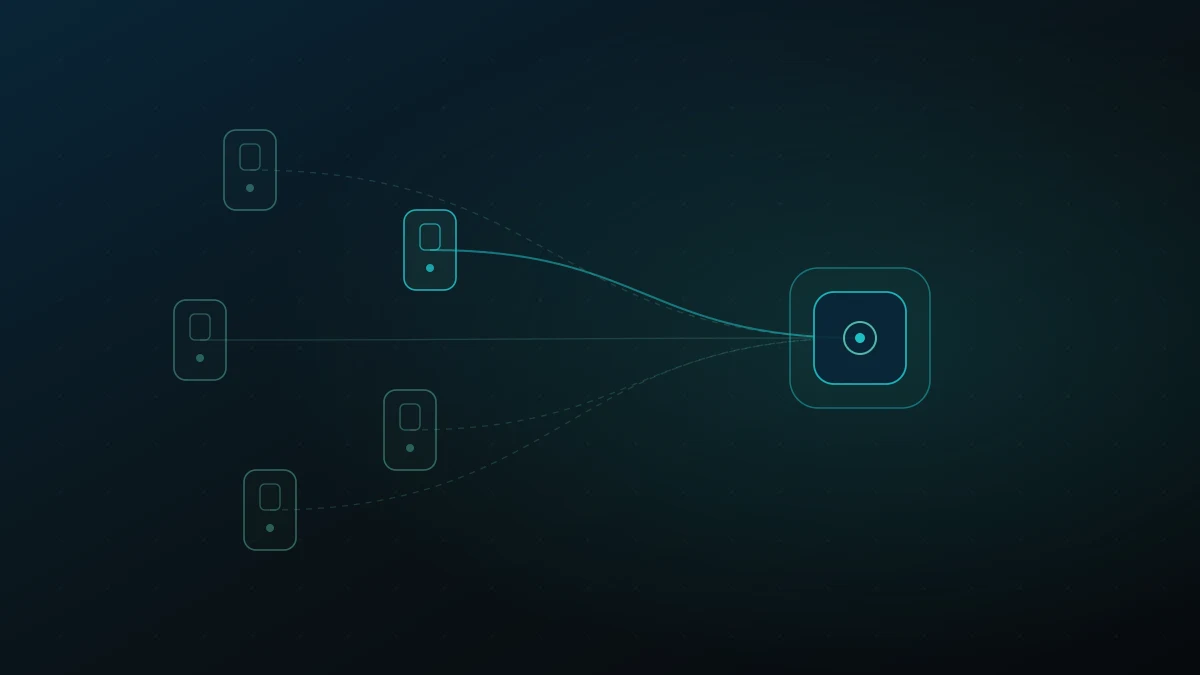
It works because of OCPP. The Open Charge Alliance describes OCPP as the global open communication protocol between charging stations and charging management systems. In plain English: the charger talks over the internet to a backoffice, and that backoffice can monitor, authorize, start, stop, configure and log sessions. A charging station management system, a CSMS, is exactly that backoffice. It is the layer that just became uncertain for every Enovates fleet.
When you still have OCPP access to an Enovates charger, you can connect that charger to Plugchoice. Plugchoice has a dedicated Enovates connection guide, and the platform is built for OCPP-compatible chargers across brands. If you want the longer version of why open protocols ended up running this market, our piece on how OCPP came to dominate EV charging covers it.
Small but important catch: OCPP does not solve everything. It does not create spare parts. It does not magically revive a manufacturer warranty. It does not guarantee future firmware updates. Open protocols help you keep operational control. They do not replace a physical supply chain. That distinction matters. A lot.
What can break after a manufacturer collapse?
The annoying answer is: not always the same thing.
Sometimes the charger stays online, but the app becomes useless. Sometimes billing keeps running, but remote diagnostics disappear. Sometimes the backend survives through a takeover, but the old login, cards or reimbursement logic changes. Sometimes there is a restart and everyone breathes out again, slightly sweaty.
For Enovates fleets, the practical risk list looks like this:
- Support becomes unclear. Who answers when a charger goes offline? The installer? The old reseller? The operator? Nobody likes that triangle.
- Spare parts become uncertain. Screens, RFID readers, sockets, controllers and modules are boring until one fails.
- Firmware becomes a question mark. Updates, security fixes and bug patches depend on someone still maintaining the product.
- Warranty handling gets messy. Even good hardware has failures. The paper trail suddenly matters.
- Backend access becomes critical. If nobody knows the OCPP URL, credentials or admin route, a simple migration becomes fieldwork.
- Customers lose trust faster than chargers fail. One bad support answer can do more damage than one offline socket.
That last one is brutal, but true.
Enovates is not an isolated warning
The EV charging market is not collapsing. That is lazy doom talk.
But parts of the market are being cleaned out, merged, sold, rescued or quietly switched off. The pattern is getting harder to ignore, and Enovates fits it almost too neatly. The company reportedly thrived until Shell Recharge stepped back from the market, a partner that accounted for around half of its revenue. One backend decision upstream, and a serious hardware maker started running out of road.
The wider list is not short:
- EVBox and Everon moved into winddown, with the AC and Everon business discontinued while support and migration routes became a real issue for customers.
- CTEK announced that its Charge Portal and Taking Charge app would stop being accessible.
- Shell Recharge Solutions handed its home and workplace charging responsibilities in six European countries to 50five.
- Powerdale went bankrupt, after which Encevo acquired the Nexxtmove activities, but Belgian users still reported uncertainty and frustration.
- And most recently, Blink Charging is restructuring in a way that reaches Belgium through the former Blue Corner operation.
Different cases, different outcomes. Same underlying lesson. The charger is only one part of the dependency. The platform around it can become the weak point.
What installers should do now
Installers should not wait until a customer calls angry from a parking garage. Start with the boring audit. Boring is good here.
Create a list of every Enovates charger you maintain or installed for customers. Add serial numbers, locations, firmware versions if known, current operator or backend, admin access status, OCPP URL, credentials and whether the customer has a billing or reimbursement setup attached.
Then test one charger. Not the hardest site. Not the VIP customer with 40 users and three billing flows. One controlled charger. Connect it to Plugchoice, check that it comes online, confirm basic status, sessions, cards and remote commands. If that works, you have a migration path instead of a theory.
Plugchoice is useful here because installers get a web portal, app-based commissioning, OCPP logs, diagnostics and remote configuration for OCPP-compatible chargers. Less guessing. Fewer "drive there and see" moments. The glamorous stuff, obviously. If you are also rethinking which brands to install next, our guide on choosing EV chargers for software compatibility is worth a read.
Start with the Enovates connection guide, then use the Plugchoice installer tools to manage the practical side.
What CPOs and operators should do now
For CPOs and operators, this is less about one charger brand and more about architecture. A mixed fleet is normal. A mixed fleet without an exit plan is just future pain with a spreadsheet attached.
Check which systems your chargers depend on. Which backend owns the live connection? Who can change the OCPP endpoint? Can chargers be routed to another operator without physically touching every unit? Are session logs exportable? Can support teams see raw OCPP messages when something goes wrong? Can billing continue while you test a new management layer?
This is where the Plugchoice OCPP Proxy matters. It lets you run Plugchoice alongside other OCPP platforms, route charger traffic, connect or disconnect operators, and keep visibility through the management layer and REST API. For larger operators, that means you do not have to treat backend migration like open-heart surgery.
And no, this is not only about Enovates. Today it is Enovates. Tomorrow it can be another OEM, app, reimbursement layer, CSMS or energy integration. Explore Plugchoice for CPOs or read more about the OCPP Proxy.
The blunt takeaway
If you manage Enovates chargers, do not wait for the situation to "become clear." That sentence has cost the EV industry a silly amount of truck rolls.
Check what you control. Check what you can export. Check whether the charger still has usable OCPP access. Then move at least one Enovates charger into Plugchoice and prove the path before customers start asking for guarantees nobody can honestly give yet.
A good charger can survive a bad business outcome. But only if the people managing it still have a way in.
Check your Enovates chargers in Plugchoice now. It is free to start, with charger management, the web portal, the app and OCPP Proxy included. If you operate a larger network, talk to Plugchoice or contact us before the migration becomes urgent.
Sources and context
- HighTech Systems: Enovates loses support from Connect Group and goes bankrupt, the bankruptcy and restart reporting
- New Mobility: charging station manufacturer Enovates pulls the plug, scale, named customers and the Shell revenue context
- Enovates: CSMS and backend compatibility, the company's own OCPP and CSMS positioning
- Open Charge Alliance: OCPP, the authoritative protocol definition
- EVBox aftersales winddown information, context on the AC and Everon winddown
- CTEK: Charge Portal and Taking Charge app transition, context on a portal and app shutdown
- Shell Recharge Solutions and 50five agreement, the home and workplace charging handover
- Chronicle.lu: Encevo acquires Nexxtmove activities and The Brussels Times: Powerdale users left stranded, the Powerdale and Nexxtmove context
- Plugchoice: if your charging backend changes direction, the Blink Charging companion piece
- Plugchoice OCPP Proxy, What is OCPP? and What is an OCPP backoffice?, background and the routing layer