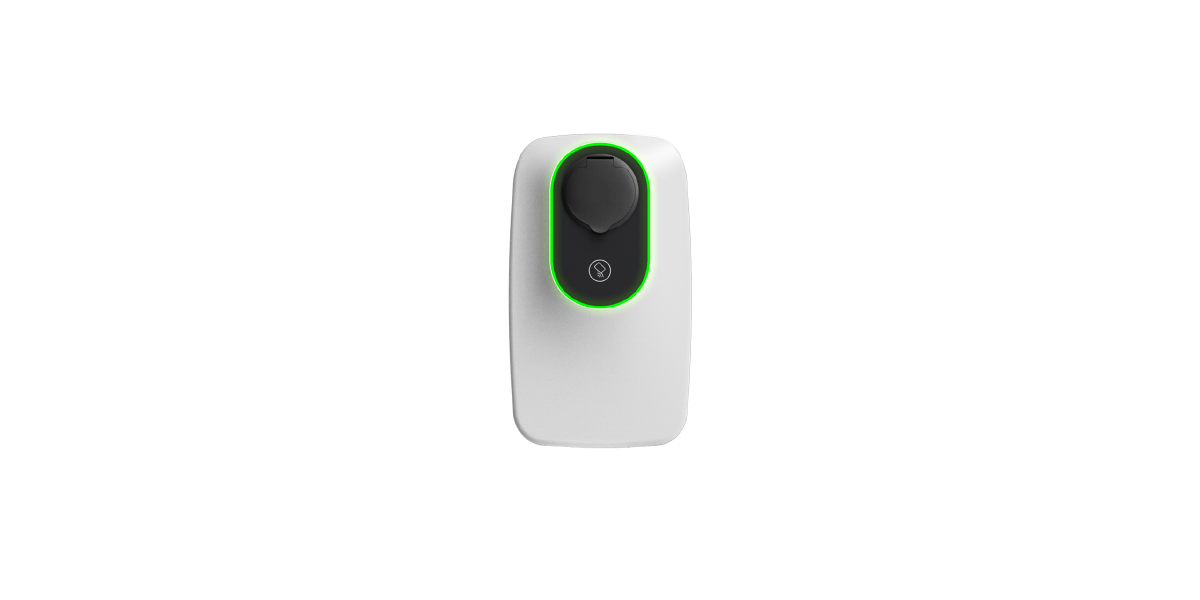
The restarted Enovates will not honour warranty and service obligations entered into before its June bankruptcy, Chief Commercial Officer Rob Wolters confirmed to Plugchoice on 17 July. Prices, meanwhile, are set to rise by as much as 40 percent.
"We are not planning to carry the burdens of the old Enovates," Wolters said. He spoke in Dutch; his quotes in this article are our translation, with the originals in the Dutch edition.
On the chargers already in the field, he was specific: "We are certainly willing to see if we can find spare parts and send them, but you should not count on the old obligations around service and support being honoured." Whether firmware support falls under the same policy remains unclear.
More than 300,000 Enovates charge points are installed across Europe, most of them under other brand names. The statements put their warranty status, and the position of the resellers and installers who sold them, in immediate question.
From rescue to clean break
Enovates, the Lokeren-based manufacturer of the ENO charger line, went bankrupt at the start of June after Dutch parent Connect Group withdrew its support. The decline began in 2023, when Shell Recharge, reported to account for roughly half of Enovates' revenue, stepped back from the installed-base business.
In July the company was restarted out of bankruptcy as Enovates Group, backed by cleantech investor Kees Koolen of Koolen Industries, with founder Bart Vereecke staying involved. Reporting on the restart, including by FaillissementsDossier.be, described its aim as keeping the existing infrastructure running and honouring existing contracts.
Nine days later, those assurances sit uneasily beside the position set out by the company's own commercial leadership. What Wolters describes is not the old Enovates continuing under new ownership, but a new company that acquired the assets of a failed one and regards the failed company's commitments as staying behind with it.
Prices up as much as 40 percent
The break with the past does not stop at the warranties. The same company that says it will not carry the old obligations is, in the same breath, raising prices by as much as 40 percent, Wolters confirmed in the same conversation. The stated reason is stripping intermediaries out of the supply chain; the effect is that the route from factory to buyer gets shorter while the retail price stays high.
When we put it to Wolters how that squares with the pricing agreements the old Enovates had struck with its distributors and wholesalers, the answer was familiar. "The old Enovates has made pricing agreements that I wasn't aware of at the time," he said. "We simply cannot uphold these agreements anymore." The same man had, until his promotion, been a key account manager at that old Enovates, the one job whose entire purpose is to know those agreements.
That completes the pattern. First the restart pronounces the old service and warranties dead. Then, asked about the commercial deals sitting underneath them, it turns out nobody knew they existed. And on top of both, the hardware is set to cost up to 40 percent more. Three separate times the bill lands at the same address: the reseller, the installer, and the customer who had nothing to do with the bankruptcy. None of this is unlawful, which is precisely what makes the situation instructive.
Why the restart owes former customers nothing
A restart of this kind, known in Belgium and the Netherlands as a doorstart, is not the old company surviving. In a Belgian bankruptcy, a court-appointed administrator takes control of the failed business and sells what can be sold. The buyer in a restart acquires assets: the brand, the designs, the stock, the tooling, in some cases staff and premises. The old company's debts and obligations are not part of the sale. Under Belgian insolvency law they remain behind in the bankrupt estate.
Warranty commitments are among those obligations, as are service contracts, support arrangements and distributor pricing agreements. Each became a claim against the estate on the day the old Enovates failed, ranking behind the secured creditors. Enovates Group is a separate legal entity, bound only by the obligations it has contractually chosen to assume.
That is the structural risk of doing business with a restarted company in any industry: it has already demonstrated, lawfully, that its obligations can be shed. Continuity of the brand name is not continuity of the promises made under it.
Former customers with claims can still file them in the bankrupt estate and await the administrator's distribution; for unsecured creditors holding warranty claims on hardware, recovery is typically minimal. One category is better placed: consumers who bought a charger from an installer or reseller hold their statutory warranty rights against the party that sold it to them. Those rights are unaffected by the manufacturer's bankruptcy.
Where the warranty burden lands
That consumer protection has a counterpart. The obligation it preserves now rests entirely on the sellers.
Most Enovates chargers do not carry the Enovates name. They reached the market as Shell Recharge and NewMotion Advanced units, TotalEnergies home chargers, distributor lines such as the Eno series, and operator fleets including EnergyVision's home-charging estate. Behind each stands an installer or reseller that gave its own customers a warranty, priced on the assumption that a manufacturer stood behind the hardware.
That manufacturer is now a claim in a bankrupt estate. Its successor states on the record that old obligations will not be honoured, that spare parts are a possibility rather than a commitment, and that the products cost up to 40 percent more. The sellers' warranty obligations to their customers remain in full force. They now carry them alone, with repair and replacement simultaneously harder to source and more expensive.
What owners and operators can do
The operational layer of an Enovates fleet does not depend on the manufacturer. Enovates chargers speak OCPP, and can be connected to a management platform of the owner's choosing; a connection guide for Enovates chargers is available, and the Plugchoice OCPP Proxy routes them to Plugchoice alongside or instead of their current backend without a site visit. That does not produce spare parts, but it keeps monitoring, management and data outside the manufacturer's discretion. Starting is free.
The open questions
The largest is firmware. A charger fleet without firmware and security updates does not fail immediately; it degrades. Wolters' statements addressed service and support obligations, and no statement has been made on whether the new Enovates will supply firmware for the old installed base, on what terms, or for how long.
Beyond that:
- How the restart's publicly reported aim of honouring existing contracts is to be reconciled with the position its CCO has now set out.
- Whether the white-label brands, Shell Recharge and TotalEnergies among them, will absorb warranty costs on their branded Enovates units.
- What happens to the existing distributor agreements, and at what prices the channel can continue to buy.
- Whether the stated willingness to look for spare parts becomes a priced service, a gesture, or neither.
Until those are answered, owners and resellers of Enovates hardware would be prudent to treat the restart as a new commercial relationship, not a continuation of the old one.
Sources
- Statements by Rob Wolters, Chief Commercial Officer, Enovates Group, to Plugchoice, 17 July 2026. Made in Dutch; translations by Plugchoice, originals in the Dutch edition of this article.
- FaillissementsDossier.be: Enovates makes a restart, the restart as Enovates Group
- High-Tech Systems Magazine: Booking.com founder Koolen rescues bankrupt Enovates, the rescue and Koolen Industries backing
- High-Tech Systems Magazine: Enovates loses Connect support and goes bankrupt, the bankruptcy
- New Mobility: charging station manufacturer Enovates pulls the plug, the European scale and named customers
- FaillissementsDossier.be: Enovates falls, unrest among operators, the operator fallout
- P-Magazine: Lokeren charger builder Enovates stops activities, the shutdown
- Plugchoice: Enovates went down. Your chargers don't have to. and Enovates restarts as Enovates Group, earlier coverage