At first glance, smart charging through the car's API sounds like the elegant solution.
You want the car to charge at the cheapest hours, slow down when the house load is high, maybe follow solar production, maybe stop and start remotely. So why not talk to the car directly?
That part makes sense. The problem is what sits underneath it.
The moment you build smart charging on top of vehicle APIs, you inherit a messy stack of OEM rules, missing controls, rate limits, billing changes and upstream breakage. That is why setups that look clever in a demo often feel flaky in real life.
That is also why what OCPP actually is matters so much. If you can control the charger instead of begging the car for permission, the whole design gets cleaner.
Why the car API route is attractive
The appeal is obvious.
The car is the thing you care about. It knows battery state, charging status, location, maybe departure time. A good vehicle API can make an integration feel neat and user-friendly. For some homes, that is enough.
This is where Enode deserves a fair mention. Enode is a smart idea. It tries to make EVs and energy devices usable through one cleaner API layer instead of forcing every developer to wrestle with every brand separately.
That is the good version of the idea.
Why the car API often sucks in practice
The problem is not that the idea is dumb. The problem is the upstream OEM layer.
Even Enode's own material makes the issue pretty plain: vehicle APIs are fragmented, vary a lot in quality, and often do not expose the charging controls you actually need for robust smart charging. Some are rich. Some are weird. Some are barely useful. Some are commercially constrained. See Enode's own guide on EV charging APIs.
Then there is the operational reality. Integrations can break when upstream platforms change or disappear. Enode's changelog includes examples where support ended after third-party platforms shut down, which is exactly the kind of thing users experience as "it worked until it didn't." See the Enode changelog.
And then there is cost and control. Some vehicle API routes come with usage limits or commercial strings attached. Tesla's Fleet API billing changed from January 1, 2025, and Smartcar openly documents pricing, request limits and battery-impact concerns around repeated wake-ups. That does not mean every car API is paid or bad. It means you do not control the rules of that layer. See Tesla Fleet API billing and Smartcar pricing.
That is the core issue. Smart charging through the car API is elegant in theory, but brittle in practice.
Enode is the honest proof of the problem
This is the part many people miss.
Enode should not be framed as the villain here. Quite the opposite. Enode is useful evidence because it sits close to the problem. If a company built around vehicle and energy APIs keeps running into OEM inconsistency, that tells you something real about the market.
It gets more telling when Enode moves closer to charger-level control to improve reliability. Their charger-pairing direction is basically an admission that the vehicle layer alone is often not enough for managed charging to work properly at scale.
That is a fair takeaway, not a cheap shot: Enode is a smart layer, but the layer underneath it is still messy.
Why OCPP changes the game
Here is the simple version:
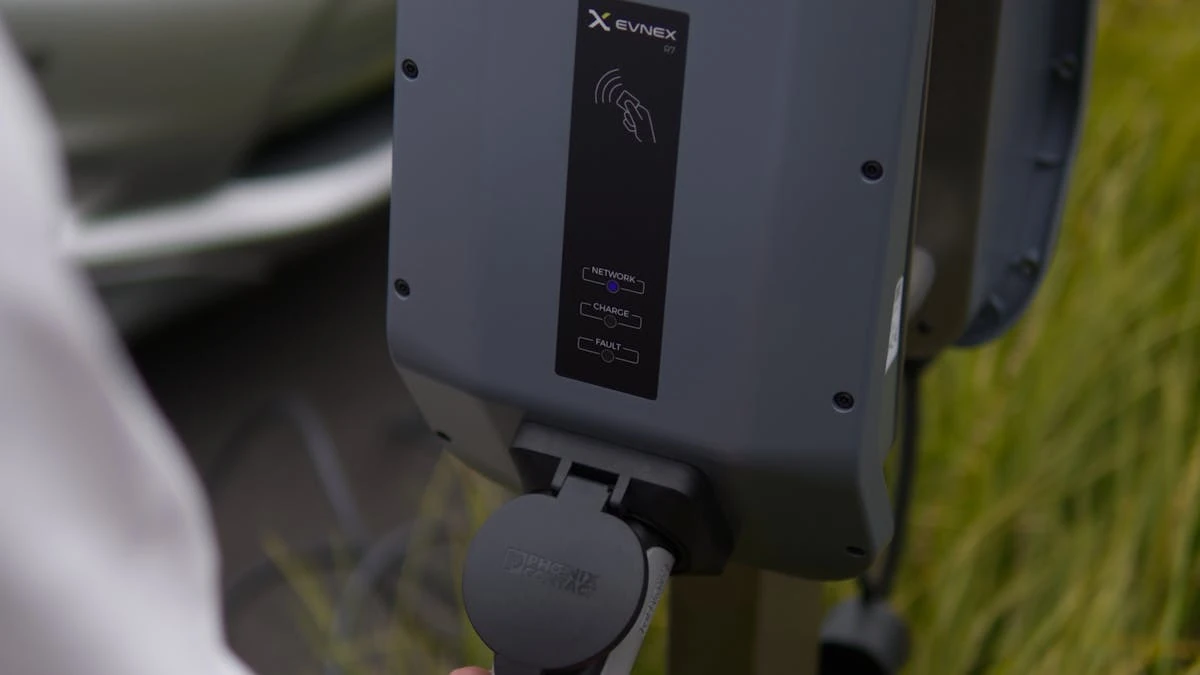
The car consumes power. The charger is the valve.
If your goal is to shift charging into cheap hours, cap site power, follow solar, prevent overload, or manage many chargers across brands, the charger is the cleaner control point.
That is what OCPP is for. The Open Charge Alliance describes OCPP as the common communication standard between chargers and central systems. In plain English: it gives you a more uniform way to manage charging hardware across vendors.
That does not mean every OCPP implementation is perfect. It does mean the architecture makes more sense.
You are controlling the thing that actually delivers the power, and you are doing it through a standard built for charger interoperability.
That is also where an OCPP backoffice starts to matter. Once the charger talks to a central system cleanly, you get a proper backend for visibility, remote control, smart charging logic and future integrations.
Why Plugchoice fits the real world better
This is where Plugchoice has the practical edge.
If you believe charger-first control is the cleaner design, then the obvious move is to use software built around that reality. Smart charging through your charger is simply a more robust foundation than hoping every car brand behaves nicely forever.
Plugchoice also fits the no-lock-in argument well. The Plugchoice integrations page leans into interoperability, broker/proxy flexibility and connecting to broader charger ecosystems instead of forcing one closed stack.
And this is not just architecture talk. You can manage chargers in a web portal, see status and transactions, and use a broader smart charging solution that is based on the charger side of the stack, where the control belongs.
That is why Plugchoice feels like the practical winner here. It controls the part of the system that is meant to be controlled.
One fair caveat
Car APIs still have a place.
If the charger cannot be controlled, if the charger is not OCPP-capable, or if an OEM offers a genuinely solid official integration, vehicle-level control can still be useful. For some users, convenience matters more than architecture.
Also, "OCPP" on a spec sheet is not magic. Some implementations are better than others, and you can still create lock-in if the surrounding setup is badly designed.
So no, this is not "car APIs never work" and it is not "OCPP is always easy."
It is simpler than that: for serious charger-side smart charging, OCPP is usually the stronger foundation.
The practical takeaway
If you are choosing how to build or buy smart charging, do not start by asking, "Which car API can I hook into?"
Start with: "Can I control the charger cleanly?"
That question will save you a lot of pain.
If you can, choose an OCPP-capable setup, use a proper backoffice, and keep the system portable across brands. That is a much healthier long-term design than tying your whole setup to whatever policy or API behavior a car maker decides next.
And if you want to act on that now, connect your charger to Plugchoice.